The Weight and the Waking: Jared C. Lewis on Fatherhood

Updated: Oct 17, 2025
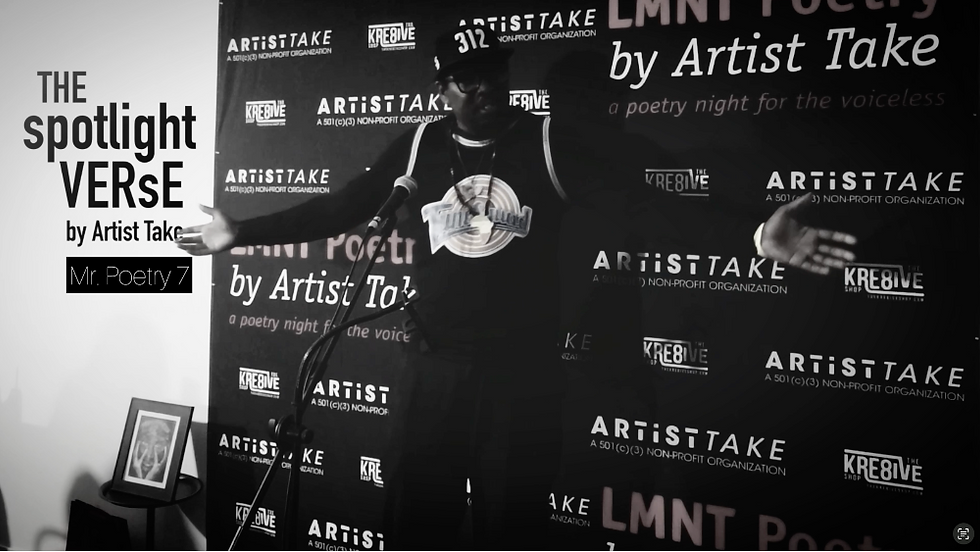
When Jared C. Lewis walked into the studio on the night of June 7, 2025, there was a heaviness about him—an unspoken burden that seemed to settle behind his eyes. It was clear: he had a lot on his mind. The room felt charged before he even stepped up to the mic. But once he hit the stage, that burden became his language. He gave us vulnerability, pure emotion, a quiet dismantling of walls. What followed was more than a poem — it was a kind of confession, a reckoning, a coming-of-age inside fatherhood.
The poem opens with a startling admission:
“In truth, it was missing because I kept it hidden. And honestly, becoming a father, for me, it kind of hurt. I mean, like everything hurt. I became mortal and sick. And bitter.”
From the first lines we learn that this is not a celebratory fatherhood poem, nor an idealized one. It is a testament to pain, to loss, to grief—not the loss of the child, but the loss of a version of the self. Jared articulates how fatherhood drew from him: “my life force had been successfully harvested.” He speaks of parts of himself dying, being targeted, marked for damnation — the language is stark and almost apocalyptic. The self-hatred that haunted him makes him “more fitting for Peter Pan’s thinning,” as though he were too childlike, too ungrounded, too lost.
He references Peter Pan—a literary figure who resists growing up, who clings to eternal youth. Jared suggests he was once ensnared by that myth: chasing words, chasing dreams, chasing the fantasy that he might still find the dream. But fatherhood jolted him awake. It made demands, it forced accountability. It demanded that he show up, that he grow, that he give something of himself.
He recalls a period of disorientation:
“My friends. Dog, don’t make me laugh. I ate and slept at work. You see, my predicament was ass. But there’s no way I could live like this as a dad. Perpetually stressing over what we didn’t have.”
Here we perceive the weight of survival, the strain of want and the ceaseless anxiety of providing. Jared admits how broken he felt, how unprepared. But even amid rage and frustration, love flickers through his lines:
“Because you see, he only showed me love. Even when I dubbed him a mistake. And yet, still, I’ve grown from his hugs.”
This is one of the poem’s emotional centers: a child’s unconditional capacity to love, which becomes a conduit of redemption for the father. Jared confronts his own shame, his own disbelief, his own regrets, and in that confrontation, he pivots toward growth. He realizes that to become a better man for his son, he must reshape his inner world.
“In the beginning, I could barely bear the weight. But I guess I had to break. So then I could become more. I had to grow up. And decide what is important. Tuck my shirt in and show up.”
That phrase — “tuck my shirt in and show up” — resonates as a symbolic act of preparation, of discipline, of respect. It is not grandiose; it is daily, mundane, yet essential. Because fatherhood is not spectacle, it is constancy. It is showing up, over and over, even when it hurts.
He names the harder truths:
“It was a hard lesson in discernment.… Spending every single day learning to be a father. I swear it’s not for the faint of heart.”
He casts his child as born “outside of love,” molded by mistrust, deceit, misjudgment, depression, pity, a pandemic. Yet the child gives him a “mission that demands my attention.” In turning toward the child, Jared resolves to confront the man in the mirror, to stop the blame, to stop the cycle of retreat.
“You made your decision. As soon as you chose to enter. And she made it hers.… So I’m going to give him my best. Because I know without a doubt. He deserves that.”
This concluding vow is not triumphant so much as fragile and fierce. It is a promise offered in the wreckage. It is redemption, offered in tiny increments.
Reading Between the Lines: Themes & Tensions
Mortality and Transformation: Jared’s language of dying and “life force harvested” frames fatherhood as both death and birth—the death of the self he once knew, and the birth of a new identity. His vulnerability is not soft; it is seismic.
Peter Pan and the Myth of Escape: The invocation of Peter Pan is more than a literary allusion. It is symbolic of Jared’s earlier resistance to adulthood, his tether to dreams, and his flightiness. Fatherhood becomes the gravity that grounds him.
Shame, Self‑Hatred, and the Cycle of Healing: A recurring undercurrent is the author’s grappling with shame and self-loathing. Yet the poem doesn’t dwell in despair; it names those shadows, wrestles with them, and resists them by committing to the child.
Unconditional Love as Crucible: The child’s love becomes a flame that tempers the father’s wounds. It becomes the force that compels change.
Embodied Commitment: The repeated gestures of showing up, tucking in, being present—these small acts become the framework of devotion. Fatherhood is not an idea; it is a daily, embodied labor.
Back in the studio that night, Jared’s internal struggle was palpable. He entered with tension in his shoulders, a heaviness in his gaze. But the stage unlocked something. He allowed inner tears to tremble. His voice cracked. He paused, and the silence held. He leaned into vulnerability rather than masking it.
It was there, in those fractures, that the poem gained its authority. When a poet reveals the wound, the audience becomes witness—not passive, but present. That night, listeners weren’t just hearing a poem; they were entering Jared’s interior world. And in doing so, they were confronted with what fatherhood can demand of the self.
In a culture that too often departs from honest reckonings of masculinity, this poem is necessary. Jared does not romanticize fatherhood. He names the hurt, the fear, the cost — and still leans into love. He shows that real courage is not the absence of pain, but the decision to carry on, to evolve.
For anyone who has felt unready, unworthy, overwhelmed by life’s demands, this poem speaks: you are not alone. The work of fatherhood (or of becoming oneself) is messy, brutal, redemptive. And love—even when delayed or wounded—can call us toward our better selves.
Lukumi Arlota – Contributing Writer
Lukumi Arlota is a mental health advocate, black empowerment activist, public speaker, and business owner.
Follow thekre8iveshop.com IG FB YT TWITTER